

When School Feels Scary, Every Morning Is A Battle.
Practical support for Sydney parents of children struggling with anxiety and school stress.
If your child is refusing school, consumed by worry, or falling apart before they've even left the house — there are strategies that help. You don't have to keep guessing.
No diagnosis required. No long waitlists. Just clarity and a clear next step.
You Can See They're Struggling.
And You Just Want To Help.
The Sunday night dread. The stomach aches that appear every Monday morning. The tears at the school gate that stay with you all day.
You know something isn't right — but you're not sure if it's anxiety, something at school, or just a phase. And the not knowing makes it so much harder to help.
What your child needs isn't pressure or pushing through. They need someone to help you both understand what's driving the worry — and what to actually do about it.
Understanding School Anxiety
School anxiety doesn't always look like obvious worry. It can show up in ways that are easy to misread as defiance, laziness or attention-seeking, when really your child is telling you they're struggling to cope.
Avoiding school
or social situations
Resistance to going to class, after-school activities or social events — not because they don't want to, but because it feels genuinely overwhelming.
Emotional outbursts or shutdowns
Worry that spills out as tears, anger or complete withdrawal, leaving you unsure whether to push or back off.
Constant worry or nervousness
Repeated questions, checking behaviour, or appearing tense and on edge even in familiar, safe situations.
Physical symptoms
Headaches, stomach aches or trouble sleeping that appear suspiciously often on school mornings.
These aren't signs of bad behaviour or poor parenting. They're signals that your child needs support to feel safe — and that's exactly what we work on together.
Start Helping Your Child Today!
Hi, I’m Laura,
founder of Clear Path.

I'm a qualified primary teacher and SEN specialist and I know how exhausting it can feel to support a child who’s struggling.
I created this space to offer calm, practical guidance and reassurance — helping parents feel steadier, more confident, and supported every step of the way.
No diagnosis required. No long waitlists. Just clarity and a clear next step.
How Anxiety Can Impact Daily Life
How Anxiety Can Impact Daily Life
Left unaddressed, school anxiety can affect:
Academic performance: Trouble concentrating or completing work
Friendships: Avoidance of peers or social activities
Family routines: Stressful mornings, homework battles, and conflict at home
Confidence: Reduced self-esteem and fear of failure
By identifying these patterns early, you can help your child develop resilience and confidence, improving both school and home life.
Practical Strategies You Can Try Today
You don’t have to face this alone.
Here are simple techniques parents can implement immediately:
Morning routines for calm starts: Predictable, structured routines reduce anxiety before school
Grounding and breathing exercises: Teach your child easy techniques to manage worry during the day
Visual worry tools: Use charts, worry boxes, or journaling to help children externalize their fears
Open conversations: Encourage your child to express feelings without judgment
Positive reinforcement: Celebrate small wins and progress in managing anxious moments
These strategies help your child feel supported and empowered, giving you confidence in your approach.
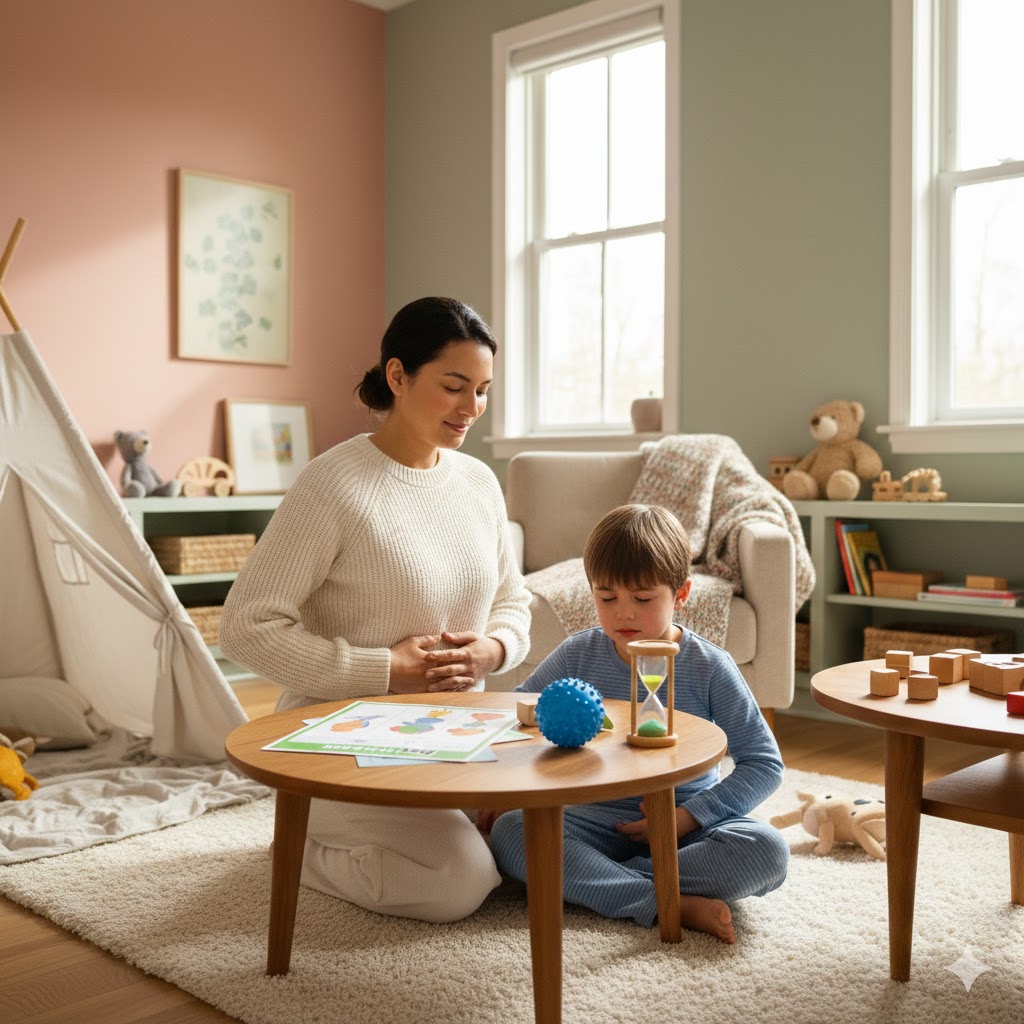
Outcomes You Can Expect
Working together, families often see.
Reduced morning and school stress: Fewer battles over leaving the house or attending events.
More confident and resilient child: Children gain skills to manage worry independently.
Tools you can rely on: No more guessing what works — you’ll have strategies that actually make a difference.
Calmer home environment: Less tension, more understanding, and stronger parent-child connection.
The result is a more harmonious home environment, where both parent and child feel supported, understood, and empowered.
How I Support
Families in Sydney
School anxiety looks different for every child, which is why I provide
practical, personalised guidance tailored to your family’s rhythms and routines.
✔ Understanding anxiety triggers and responses
✔ Developing coping strategies that work at home and school
✔ Supporting communication with teachers and staff
✔ Building confidence step by step, not through pressure
I proudly support families across Sydney, including the Eastern Suburbs, Inner West, Marrickville, Ryde and surrounding areas. My strategies also align with local school expectations and real‑world routines.
If this sounds familiar, book your free 15-minute parent call and
discover practical strategies tailored for your child."
11+
Years of Experience
900+
Children Taught
300+
Parents Supported
35+
ECHPs Written
Outcomes You Can Expect
How I Can Help
Working together, parents often see:
Reduced morning stress: Fewer battles about leaving home or attending school
Improved confidence and resilience: Children manage worry more independently
Better academic and social engagement: More focus at school and easier peer interactions
Calmer home environment: Less tension, more connection, and predictable routines
Ready to Take the Next Step?
School stress and anxiety are common for primary-aged children, and even small, consistent steps can dramatically improve confidence and wellbeing.
I proudly support families across Sydney, including Eastern Suburbs, Inner West, Marrickville, and surrounding areas. My strategies are tailored to your child’s needs and align with local school expectations, helping you communicate effectively with teachers and staff.
Ready to support your child in handling school stress and anxiety with confidence? Book your Discovery Session today.
All services are non-diagnostic and focused on practical,
early support for families in the Sydney area.
Trusted by Families Across the UK
Parents often tell us they finally felt heard and finally understood their child.

"During an overwhelming time for our family, Laura provided steady, compassionate support. She helped us understand our child’s needs clearly and guided us through next steps with confidence and care. What mattered most was her focus on what would genuinely help our child flourish — not just academically, but emotionally and socially too. We felt supported as a whole family, not just as parents.”

Amanda, Dorset
Parent of a young child
I can't thank Laura enough for the care, patience, and understanding she has shown my son Bailey over the last 3 years. She has taken the time to really get to know his needs, strengths, and triggers, and responded with kindness and reassurance.
I would highly recommend Laura to any family needing compassionate and highly skilled SEN support.
Gemma, Bournemouth
Baileys Mum
“Laura was a vital source of support for our family, particularly for our youngest child with more complex needs. She helped us identify the most appropriate support for both of our children and guided us through the process with clarity, thoughtfulness, and genuine care.”
Beth, Dorset
Parent of two children
Laura is such a ray of sunshine. She has a way of making every child feel special. Her kind hearted way makes children calm in her presence. She sees the good in others and that shines through the children as they grow stronger knowing they have someone who truly believes in them. A real privilege to have her as my child’s teacher.
Verity, Bournemouth
Parent to four children
Parents trust me because they see real progress in their children.
From stronger social skills to improved confidence and a genuine love for learning.
Frequently Asked Questions
How do I know if my child’s school anxiety is more than normal nerves?
It’s common for children to feel occasional nervousness before tests or new situations. However, ongoing distress, frequent complaints of headaches or stomach aches before school, difficulty sleeping, emotional shutdowns, or school refusal may indicate deeper anxiety. Early support can prevent patterns from becoming entrenched.
What causes school anxiety in primary-aged children?
School anxiety can stem from academic pressure, social challenges, perfectionism, sensory overwhelm, transitions, or fear of making mistakes. Sometimes it develops gradually; other times it appears suddenly after a specific event. Understanding the underlying trigger is key to providing effective support.
What should I do if my child refuses to go to school?
School refusal is often a sign of overwhelm rather than defiance. Remaining calm, validating feelings, and introducing gradual exposure strategies can help rebuild confidence. I guide parents through practical, step-by-step approaches that reduce distress while maintaining school engagement.
Can anxiety look like anger or behaviour problems?
Yes. Anxiety in children does not always present as worry or tears. It can appear as irritability, anger, avoidance, perfectionism, or emotional shutdown. When we recognise anxiety as the driver, responses become more supportive and effective.
How can I help my anxious child feel more confident at school?
Building confidence involves predictable routines, coping tools for managing worry, and strengthening emotional literacy. Teaching children how to name feelings, problem-solve, and recover from setbacks improves both resilience and independence over time.
Do you support families across Sydney?
Yes. I work with families across Sydney, including the North Shore, Inner West, Eastern Suburbs, Northern Beaches, and surrounding areas. My strategies align with local school expectations and help parents communicate clearly with teachers and staff.
Is this therapy or a clinical anxiety service?
No. My services are non-diagnostic and focused on practical, early support for families. I provide actionable strategies parents can implement immediately at home and in collaboration with schools.

Fast results, personalised strategies, practical guidance, parent empowerment.


Pages
Website Policies
© Copyright 2026 SEN Parent Support UK. All rights reserved.